
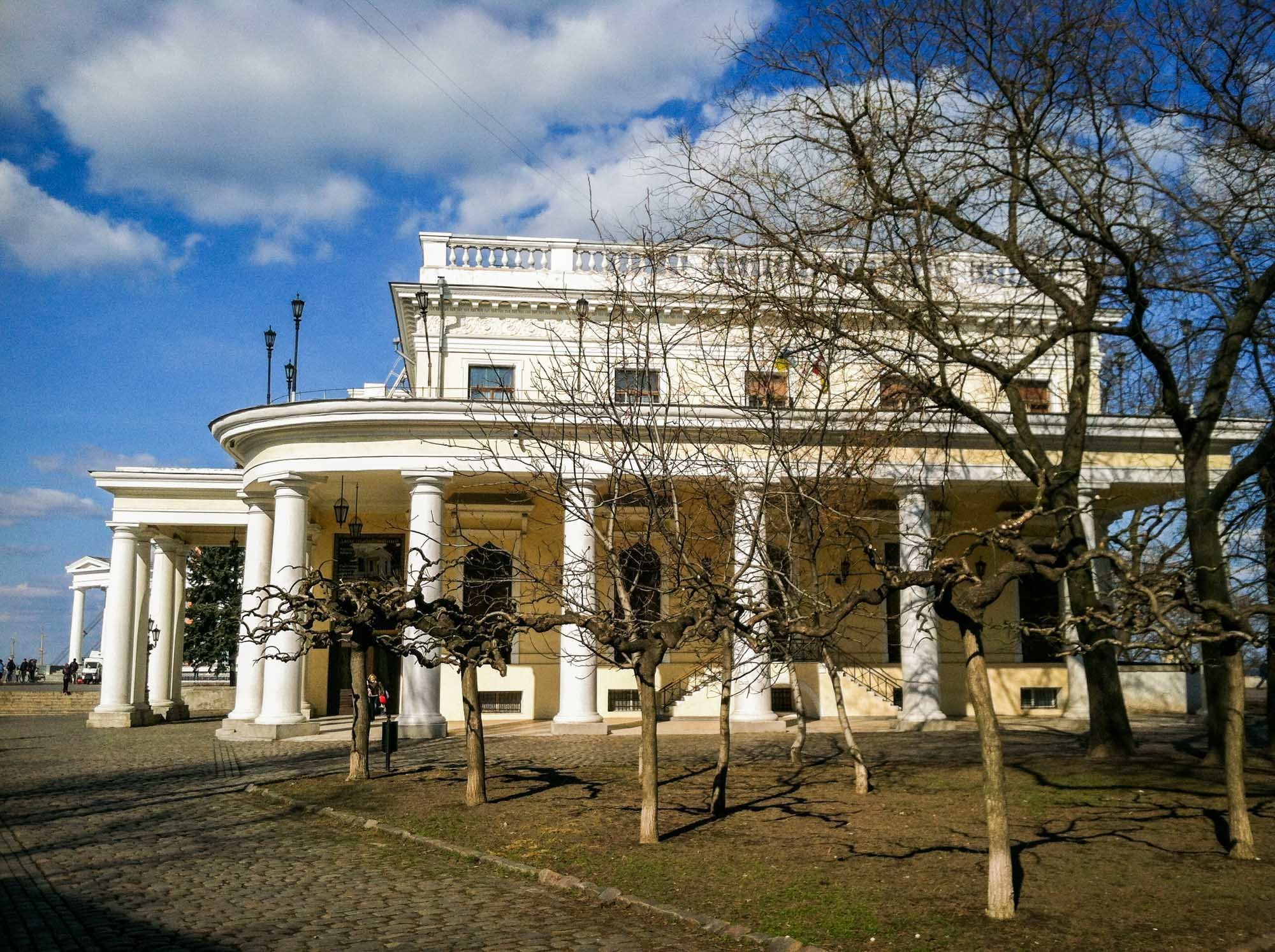
One of Odesa’s most iconic landmarks, the Vorontsov Palace, was built in 1827 in the Empire style, designed by architect Franz Boffo. The palace stands on the site of a former Turkish fortress captured by troops led by José de Ribas and later became the residence of Governor-General Mikhail Vorontsov. At the time, it was renowned for its grandeur — lavish interiors, gilded decor, statues, and intricate stucco work — surpassing even some Italian palaces in splendor, according to contemporaries.
Over the years, the palace served various purposes: it housed the Jungmeister Men's Gymnasium, the Society for the Acclimatization of Animals, and, beginning in 1936, the Pioneers' Palace. Today, it is home to the City Palace of Children’s and Youth Creativity.
Interesting facts:
In August 1837, the poet Vasily Zhukovsky visited the newly completed palace. His diary entry reads: “August 28. Walk through the city. Tour of Count Vorontsov’s residence. Greenhouses. Medal cabinet. Library.” This library was among the richest private collections in the region and had been used by Alexander Pushkin before it was moved to its dedicated hall. Later, the entire collection was donated to the local university, where it remains today under the name “Vorontsov Fund.”
During the Crimean War, on April 10, 1854, the palace was shelled by the Anglo-French fleet and partially damaged. To this day, a cannonball from the attack is still embedded in the wall of the ballet studio on the ground floor. At the time, Count Vorontsov considered his rare book collection more valuable than the palace itself and ordered it to be securely hidden — a decision that saved it from destruction.
Photo: Discover.ua


 Share on Facebook
 Share on X